Before a difficult meeting, stuck in traffic or at the end of a long day: breathing slowly is one of the simplest tools we have, and it’s always available. You don’t need an app, a mat or complete silence.
The exercise, step by step
This is a simple version of slow breathing. Do it for three minutes — you can set a timer — and adjust the pace until you feel comfortable. Never force it.
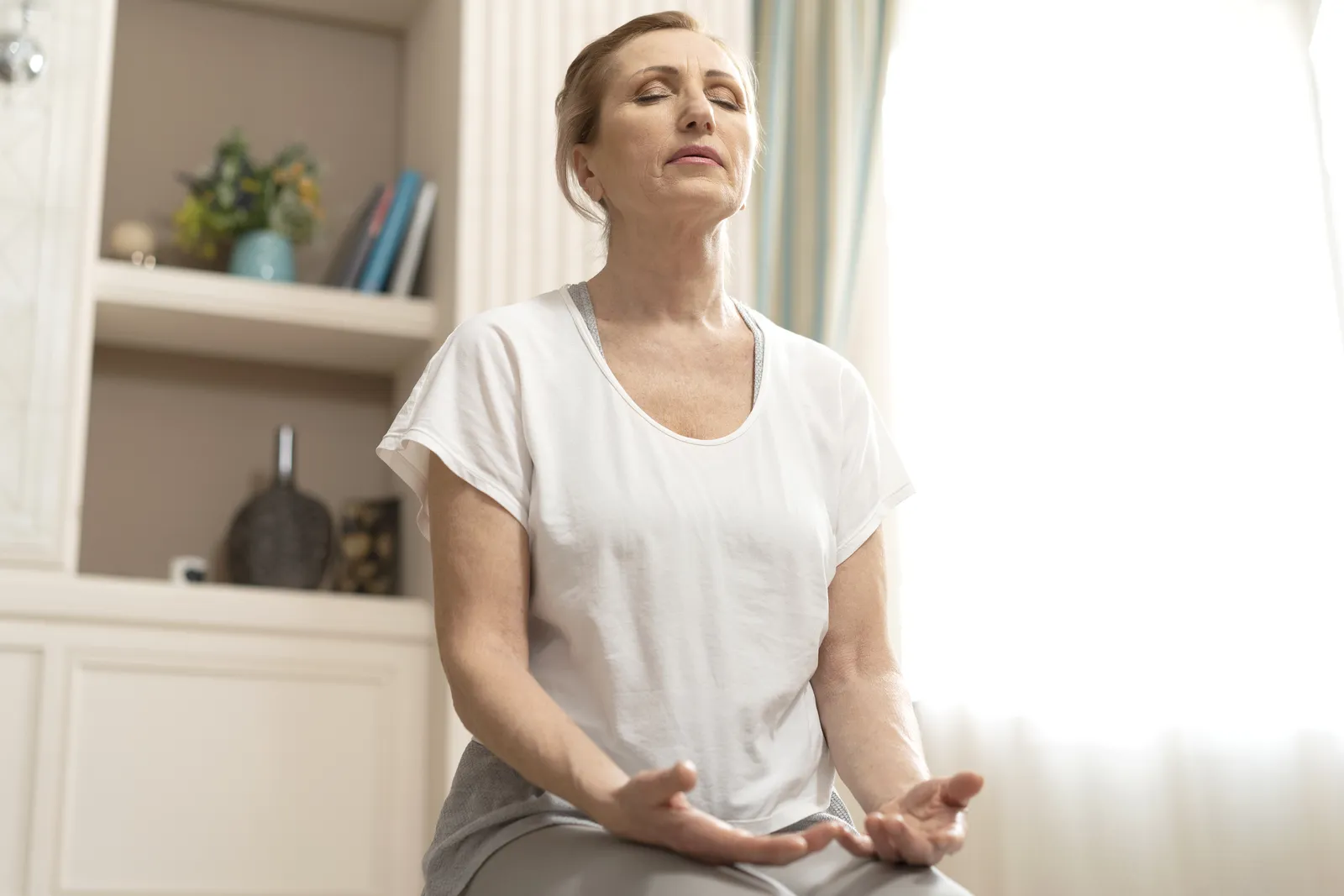
Sit with your back straight and your feet flat on the floor.
Breathe in through your nose while counting to four in your head.
Pause briefly, without holding your breath hard.
Breathe out slowly through your mouth, counting to six.
Repeat for about three minutes.
Breathing out for a little longer than you breathe in is the heart of the exercise. If counting distracts you, imagine slowly blowing up a balloon and letting it go down even more slowly.
Rest one hand on your belly and feel it rise as you breathe in and fall as you breathe out. If you notice your shoulders lifting with each breath in, let them drop. There’s no wrong way to do it: if you lose count, start again from one, with no rush and no judgement.
You can’t control the whole day. You can control the next six seconds of breathing out.
When and where to use it
The best time is before you need it. Try linking it to something you already do: after parking the car, before opening your laptop, when you go to bed. The more you practise it on calm days, the easier it is to remember on hectic ones.
If you feel dizzy or uncomfortable, go back to breathing normally. And remember that a breathing exercise is an everyday aid, not a treatment: if anxiety is frequent or stops you from getting on with your life, talk to a health professional.
A wider routine
Slow breathing works best as part of a bigger picture: regular sleep, movement, meals at set times. Some people also include a supplement in their routine on the most intense days.
Vitamins B6 and B12 contribute to the reduction of tiredness and fatigue.
In short
Breathe in for four counts, out for six, for three minutes.
Practise on calm days so you remember on hectic ones.
Link the exercise to a fixed moment of the day.
Frequent anxiety is worth a conversation with a professional.
This article is for information only and is not a substitute for advice from a health professional.