
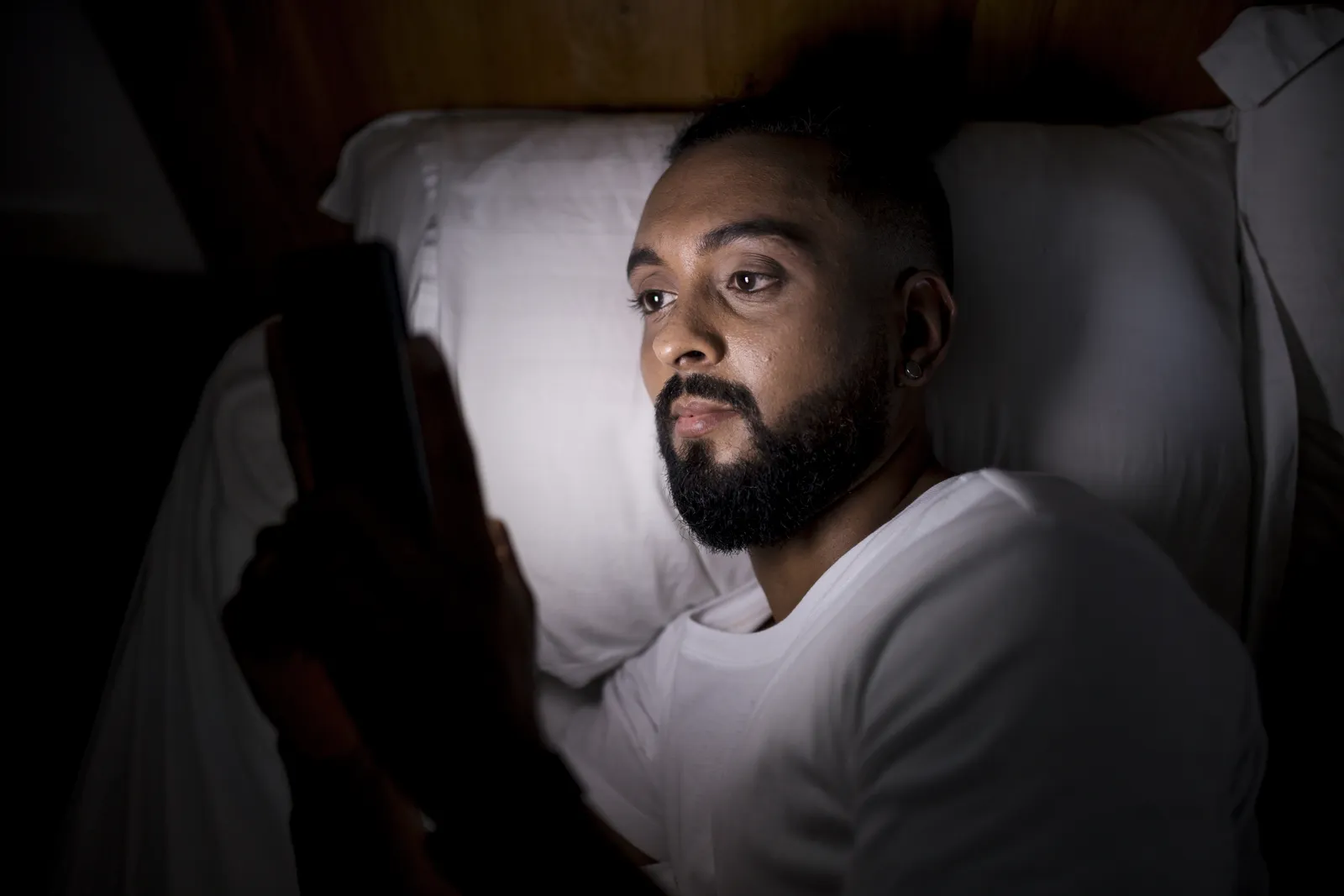
Your phone is the last thing you see at night and the first thing in the morning. There’s nothing wrong with that in itself — but it’s worth understanding what that habit might be doing to the time you fall asleep.
It’s not just the light
There’s a lot of talk about the blue light from screens, and it’s true that bright light late in the day doesn’t help your body realise it’s night. But the bigger problem is usually something else: the content. A work email, an argument in a group chat or an episode that ends on a cliffhanger keep your mind awake long after you’ve put your phone down.
And then there’s the “just one more” effect: endless scrolling has no natural end, so bedtime keeps slipping without us noticing.
This isn’t about demonising your phone. It’s about choosing when it comes into and leaves your day. Watching a film on the sofa with the lights low is very different from answering work messages under the covers.
Small changes that make a difference
Set a switch-off time, 30 to 60 minutes before bed.
Charge your phone outside the bedroom and use a simple alarm clock.
Turn on night mode and lower the brightness in the evening.
Swap scrolling for paper: a book or a magazine has an end.
Silence notifications overnight.
Your screen has no “that’s enough” button. You have to be the one who presses it.
If you can’t fall asleep
Tossing and turning in bed, picking up your phone to check the time, usually makes things worse. If sleep won’t come, get up, do something calm in low light and go back when you feel sleepy.
Some people complement their evening ritual with a melatonin gummy. If it makes sense for you, stick to the dose on the label.
Melatonin contributes to the reduction of time taken to fall asleep. The beneficial effect is obtained by consuming 1 mg of melatonin close to bedtime.
Melatonin may cause drowsiness, so don’t drive or operate machinery after taking it. It isn’t suitable for pregnant or breastfeeding women or for children. If you often struggle to fall asleep, or it goes on for weeks, talk to your doctor.
In short
What’s on the screen wakes you up as much as the light.
Choose a time to switch off and stick to it.
Charge your phone outside the bedroom.
Persistent sleep problems are worth a conversation with your doctor.
This article is for information only and is not a substitute for advice from a health professional.